Product Description
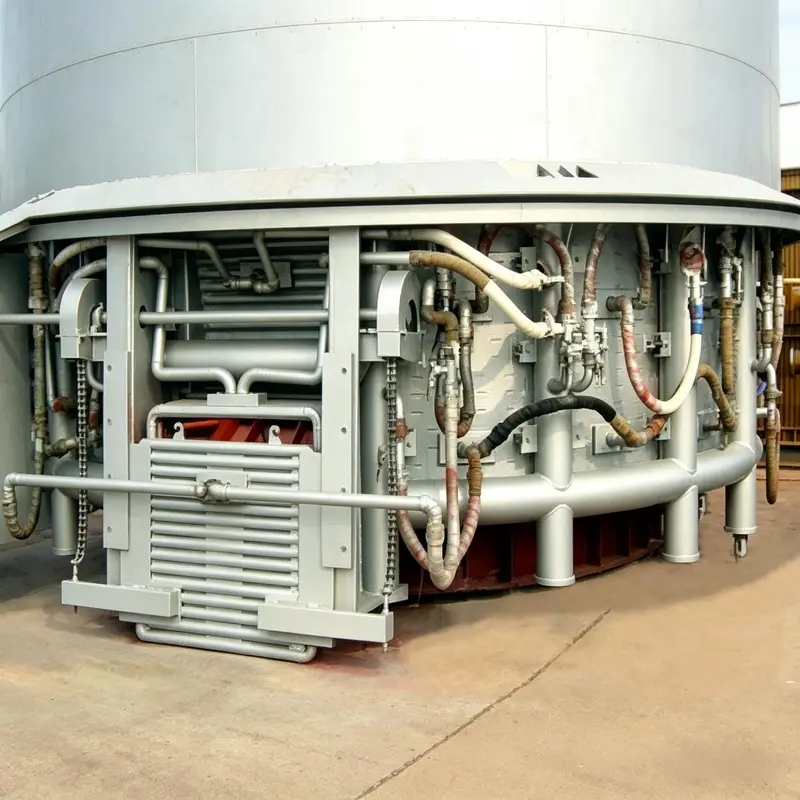
Water Cooling System Used for Submerged Arc Furnace
The cooling and water system is the "lifeline" of the submerged arc furnace (SAF), responsible for removing the enormous heat generated by key components such as the electrode system, furnace body, and short network, ensuring continuous and stable operation within safe temperature ranges. This system consists of multiple subsystems including cooling water distribution, circulation, monitoring, and control. The rationality of its design directly affects the operating rate, equipment life, and safety of the SAF.
I. Definition and Function of Cooling and Water System
| Item | Description |
|---|
| Definition | The SAF cooling and water system refers to a complete set of equipment that provides circulating cooling water for various high-temperature components of the SAF, including water source, circulating pump sets, cooling towers/heat exchangers, piping valves, monitoring instruments, and control systems. |
| Main Functions | 1. Removes heat generated by current flow and thermal radiation from components such as copper shoes, pressure rings, water-cooled cables, and water-cooled protective covers, preventing overheating damage
2. Maintains structural components such as the furnace shell and roof within reasonable temperature ranges, extending equipment service life
3. Provides fault warning by monitoring parameters (flow rate, temperature, pressure) of the water cooling system to judge equipment operating status |
II. Composition Structure of Cooling System
A complete SAF cooling system consists of the following main components:
| Component | English Description |
|---|
| Cooling Tower | Equipment that dissipates heat from circulating water into the atmosphere, available in natural draft and mechanical draft types |
| Circulating Water Pump | Provides power for cooling water circulation, usually centrifugal pumps with standby pumps to ensure continuous operation |
| Heat Exchanger | Used for heat exchange between soft water in closed system and open cooling water, available in plate heat exchanger and shell-and-tube heat exchanger types |
| Water Tank/Reservoir | Stores cooling water, buffers system water volume fluctuations, usually divided into hot water tank and cold water tank |
| Piping and Valves | Transports and distributes cooling water, valves used for flow regulation and water circuit isolation |
| Monitoring Instruments | Includes flow meters, thermometers, pressure gauges, conductivity meters, etc., for real-time monitoring of system operating parameters |
| Water Treatment Device | Includes water softening devices, deaeration devices, dosing devices, etc., to ensure water quality meets requirements |
| Control System | PLC/DCS control system for automatic pump start/stop, automatic temperature regulation, fault alarm, etc. |
III. Water Quality Requirements and Standards
Cooling water quality is crucial for system operating life and safety, with main indicator requirements as follows:
| Water Quality Indicator | Requirement Range | Description |
|---|
| pH Value | 7.0 - 8.5 | Neutral or slightly alkaline, prevents acidic corrosion |
| Total Hardness | ≤ 8 °dH (German degree) | Excessively high hardness causes scaling on inner pipe walls, reducing cooling efficiency |
| Suspended Solids | ≤ 10 mg/L | Excessively high levels can block cooling channels |
| Chloride Ion (Cl⁻) | ≤ 50 mg/L | Excessively high levels can cause pitting corrosion of stainless steel |
| Conductivity | ≤ 500 μS/cm | Excessively high levels lead to electrochemical corrosion |
| Dissolved Oxygen | ≤ 0.1 mg/L | Deaeration required for closed systems to prevent oxidative corrosion |
| Microbial Content | No significant proliferation | Prevents biological slime from blocking pipes |
IV. Key Design Parameters of the System
| Parameter | Recommended Value | Description |
|---|
| Total Circulating Water Flow | 5-10 m³/h per ton of furnace capacity | For a 12500kVA SAF, total circulation is approximately 200-300 m³/h |
| Water Supply Pressure | 0.3 - 0.6 MPa | Ensures sufficient pressure and flow at each cooling point |
| Return Water Pressure | 0.05 - 0.15 MPa | Ensures smooth return flow and no vaporization |
| Inlet Water Temperature | ≤ 35℃ | Enhanced cooling required during high summer temperatures |
| Max Outlet Temperature | 65℃ (copper components) / 60℃ (cables) | Alarm and corrective action required when exceeded |
| Temperature Rise (ΔT) | 8 - 15℃ | Difference between inlet and outlet water temperature |
| Pump Standby Rate | 100% (one duty, one standby) | Standby pumps must be configured for critical pumps |
| Elevated Tank Capacity | 5-10 minutes of emergency water supply | Provides temporary cooling during power outages |
V. Common Faults and Preventive Measures
| Fault Type | Cause Analysis | Preventive Measures |
|---|
| Pipe Scaling | High water hardness; temperature rise accelerates scaling | Use softened water, clean pipes regularly, install water treatment devices |
| Component Overheating | Insufficient flow, poor water quality, blocked cooling channels | Install flow and temperature monitoring, inspect and clean regularly |
| Leakage | Aged seals, weld cracks, corrosion perforation | Regularly inspect and replace seals, conduct pressure tests |
| Pump Failure | Motor burnout, bearing wear, cavitation | Configure standby pumps, perform regular maintenance, install low-water level protection |
| Cooling Tower Efficiency Drop | Clogged fill, fan malfunction, uneven water distribution | Regularly clean fill, inspect fans, maintain water distribution system |
| Electrochemical Corrosion | High water conductivity, contact between dissimilar metals | Control water conductivity, use insulating joints, add corrosion inhibitors |
VI. Selection Recommendations
| Selection Factor | Recommendation |
|---|
| Furnace Capacity | Small furnaces (<12500kVA) → Open loop cooling + natural draft cooling tower; Large and medium furnaces (>12500kVA) → Closed loop system + mechanical draft cooling tower |
| Water Source Conditions | Good water quality (low hardness) → Open system acceptable; Poor water quality or water scarcity → Must use closed loop system |
| Environmental Requirements | Strict discharge regulations → Closed loop system with zero or low discharge design |
| Automation Level | Pursuing full automation → Equip with PLC/DCS control system for automatic monitoring and regulation of flow, temperature, and pressure |
| Standby Configuration | Critical equipment must have one duty and one standby (pumps); elevated tank or emergency diesel pump for power outages |
| Water Treatment Solution | Combined solution: softened water + deaeration + corrosion inhibitor and scale inhibitor |
VII. Key Parameter Explanations
| Parameter | English Description |
|---|
| Open Loop Cooling System | Cooling water is discharged after single use without recycling, suitable for areas with abundant water sources |
| Closed Loop Circulating Cooling System | Cooling water circulates within a closed system with only small makeup losses, offering good water conservation; it is the mainstream configuration for modern SAFs |
| Soft Water | Water with calcium and magnesium ions removed, low hardness, not prone to scaling; recommended for closed systems |
| Temperature Rise (ΔT) | The temperature increase of cooling water after passing through cooled components, reflecting the thermal load of the component |
| Elevated Tank | Water storage tank positioned above water consumption points; provides emergency cooling by gravity during power outages |
| Conductivity | An indicator reflecting the concentration of ions in water; excessively high values accelerate electrochemical corrosion |