Product Description
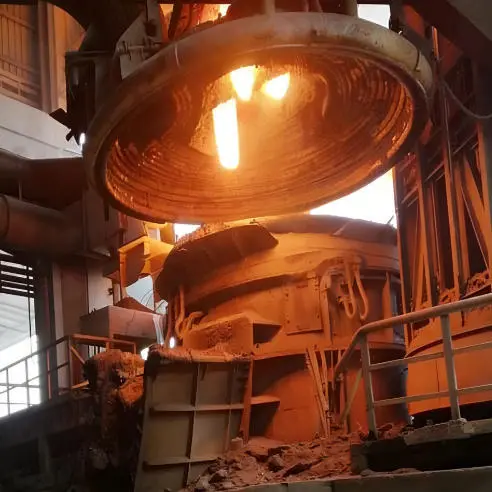
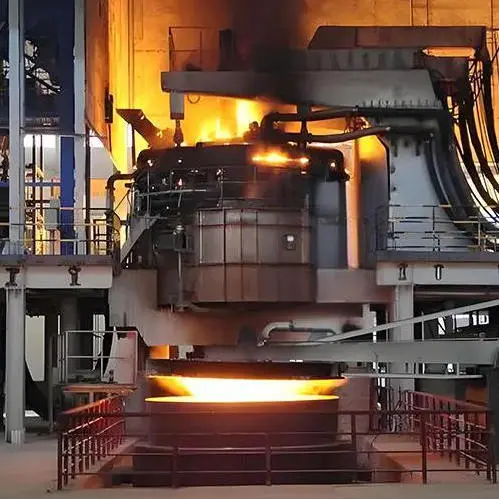
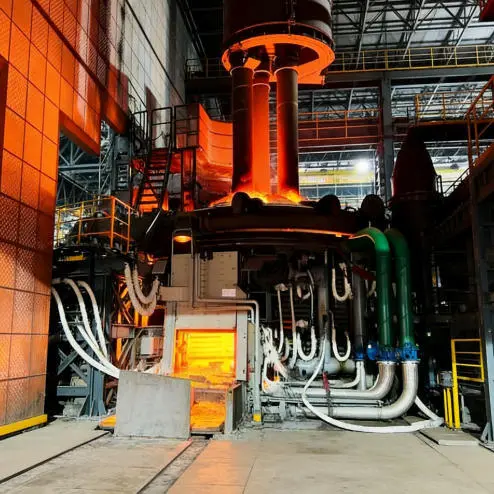
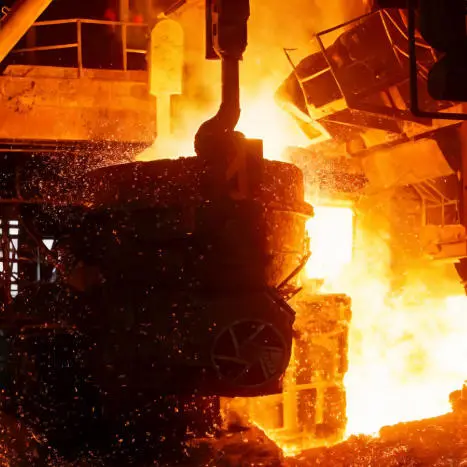
Small-Scale Electric Arc Furnace (Approx. 0.5t - 30t)
Small-scale electric arc furnaces (EAFs) in the 0.5 to 30 ton range are the entry-level choice for many small foundries, specialty steel producers, and research and development institutions. They offer high flexibility, lower initial investment, and the ability to produce a wide variety of high-quality steels and alloys, making them an ideal solution for market-oriented, small-batch, and multi-variety production.
I. Definition and Power Level Classification
Small-scale electric arc furnaces (0.5-30 tons) are typically categorized into three power levels based on the transformer capacity allocated per ton of steel. Power level directly determines melting efficiency, production rate, and capital cost.
Power Level Classification for 0.5-30 ton EAFs:
| Power Level | Definition (kVA per ton of steel) |
|---|
| Regular Power (RP) | < 400 kVA/t |
| High Power (HP) | 400 - 700 kVA/t |
| Ultra-High Power (UHP) | > 700 kVA/t |
For small furnaces (0.5-30t), Regular Power (RP) and High Power (HP) configurations are most common due to the lower production volume requirements and the need to manage investment costs.
II. AC vs. DC: Two Main Technical Routes
Small-scale electric arc furnaces are primarily divided into AC (three-phase) and DC types. The table below summarizes their differences:
| Comparison Item | AC Electric Arc Furnace (Three-Phase) | DC Electric Arc Furnace |
|---|
| Power Supply | Three-phase AC power, requires high-voltage grid (6kV/10kV/35kV) | Single DC power after rectification, can use 380V workshop power |
| Electrode Count | 3 graphite electrodes | 1 top electrode + bottom electrode |
| Grid Impact | Large, requires SVC/SVG compensation | Small, basically no impact on grid |
| Power Factor | Lower (0.7-0.8), requires compensation | Higher (>0.9), better power quality |
| Melting Temperature | High | Very high (≥2000°C) |
| Investment Cost | Relatively high (requires high-voltage transformation) | Relatively low (directly uses 380V) |
| Typical Applications | Small-scale steel production, 1.5-30t | Labs, research, precious metals, 0.1-0.7t |
| Advantages | Mature technology, large capacity range, can produce various alloy steels | Low grid requirements, flexible use, small footprint |
| Disadvantages | Requires dedicated high-voltage substation, large investment | Smaller capacity, less common |
DC furnaces are particularly suitable for environments without high-voltage grid access. They can operate directly on 380V workshop power, making them an ideal choice for small workshops and laboratories that cannot afford high-voltage transformation equipment.
III. Key Technical Features of Small-Scale EAFs
3.1 Compact Design and Flexible Operation
Small-scale EAFs are designed with compact dimensions and flexible operation in mind. They typically feature:
- Swing-open furnace cover for top charging: Allows for quick and easy charging of raw materials.
- Hydraulic furnace tilting: Enables easy slagging (typically 12°-14°) and tapping (typically 42°-45°).
- Small footprint: The equipment occupies minimal floor space, making it ideal for workshops with space constraints.
3.2 Water-Cooled Systems for High-Temperature Operation
To withstand the intense heat generated by the arc, small-scale EAFs incorporate water-cooled components:
- Water-cooled furnace cover: Protects the furnace cover from thermal damage and extends its service life.
- Water-cooled furnace walls: Tube-type or panel-type water cooling systems on the upper shell and walls help manage extreme temperatures and allow for higher power input.
3.3 Hydraulic Electrode Lifting System
The electrode regulation system is critical for stable furnace operation. Modern small-scale furnaces use hydraulic systems with advanced control:
- Proportional valve hydraulic system: Provides precise control of electrode position.
- Automatic electrode regulator: Often based on PID control algorithms, ensuring arc stability and energy efficiency.
- Closed-loop control: Electrode current signals are compared with setpoints, and the electro-hydraulic servo valve adjusts the electrode height accordingly.
3.4 PLC-Based Automation and Control
Even small-scale furnaces benefit from modern automation technologies:
- PLC + Industrial PC control: Basic automation (Level 1) and process control (Level 2) functions.
- HMI (Human-Machine Interface): Real-time monitoring of process parameters, data logging, and alarm management.
- Variable frequency drive technology: For energy-efficient control of auxiliary systems.
3.5 Eccentric Bottom Tapping (EBT)
Modern small-scale EAFs, especially those in the 5-30 ton range, often feature EBT (Eccentric Bottom Tapping) technology. EBT allows for:
- Slag-free tapping: Prevents slag from entering the ladle, improving steel cleanliness.
- Hot heel retention: Retaining a portion of molten steel for the next heat improves yield and reduces energy consumption.
3.6 Optimized Short Network Design
To minimize electrical losses and improve power transfer efficiency, small-scale EAFs incorporate:
Optimized short network structure (energy-saving type): Reduces reactance and electrical losses.
Copper-steel composite conductive arms: Lightweight, high-conductivity arms that reduce maintenance costs.
High-current water-cooled cables: For efficient power transmission from the transformer to the electrodes.
IV. Applications and Steel Grades
Small-scale EAFs are known for their versatility and can produce a wide range of steel grades and alloys:
| Application | Specific Products |
|---|
| Steel Production | Carbon structural steel, high-quality carbon steel, alloy structural steel, stainless steel, tool steel, bearing steel, electrical steel, heat-resistant steel |
| Ferroalloys | Ferronickel, ferromanganese, ferrochrome, ferrosilicon |
| Precious Metals | Palladium, platinum, gold, silver |
| Non-Ferrous Metals | Copper, nickel, lead |
| Other Materials | Rare earth materials, high titanium slag, refractory materials, ceramics, electronic waste, metal slag/scrap, new material R&D |
Small-scale EAFs are particularly suited for producing specialty steels (special steel grades) that require high alloy content, low impurity levels (P, S, O), and specific alloying elements such as lead, boron, vanadium, titanium, and rare earths.
V. Selection Recommendations
When selecting a small-scale EAF for your operation, consider the following factors:
| Consideration Factor | Recommendation |
|---|
| Product Mix | Wide product mix (carbon + alloy + stainless) → AC EAF; Single product or special steel → DC or High Impedance AC |
| Power Supply Conditions | No high-voltage grid or limited capacity → DC EAF (380V); Strong grid connection → AC EAF |
| Production Capacity | Target <20,000 tpy → 1.5-5t furnace; 20,000-50,000 tpy → 10-30t furnace |
| Investment Budget | Limited budget → DC EAF or RP AC furnace; Higher budget → HP AC furnace with EBT |
| Raw Materials | 100% scrap → Consider standard AC configuration; High DRI/HBI ratio → Requires robust power supply |
| Automation Level | Basic automation with PLC and HMI is standard; For advanced process optimization, invest in Level 2 process control |
| Environmental Compliance | Ensure dedusting system (baghouse) is correctly sized for the furnace capacity (typically 200,000-400,000 m³/h for this range) |
VI. Summary
The small-scale electric arc furnace (0.5-30 tons) is a versatile and essential tool for the modern steel and metallurgical industry. Key takeaways for potential buyers include:
- Power Level Choice: RP and HP are the most common for this size range, balancing productivity with investment cost.
- AC vs. DC: DC furnaces offer a practical solution for users without high-voltage grid access, operating directly on 380V workshop power.
- Core Technologies: Water-cooled systems, hydraulic electrode lifting, and PLC-based automation are standard on modern small furnaces.
- Flexibility: This furnace class is capable of producing a wide range of products, from common carbon steels to high-alloy specialty steels and even precious metals.
- Total Cost of Ownership: Beyond initial capital cost, consider operational parameters such as electrode and refractory consumption, power consumption (kWh/t), and maintenance requirements.